
For thousands of years, cannabis had been used as a medicine.
Ancient civilisations documented its therapeutic use, physicians prescribed it for a range of conditions, and patients continued to report its effects. Yet despite this long history, one fundamental question remained unanswered.
Why did cannabis work?
Scientists knew the plant contained hundreds of different chemical compounds, but they did not know which ones were responsible for its effects on the human body.
That changed in 1964.
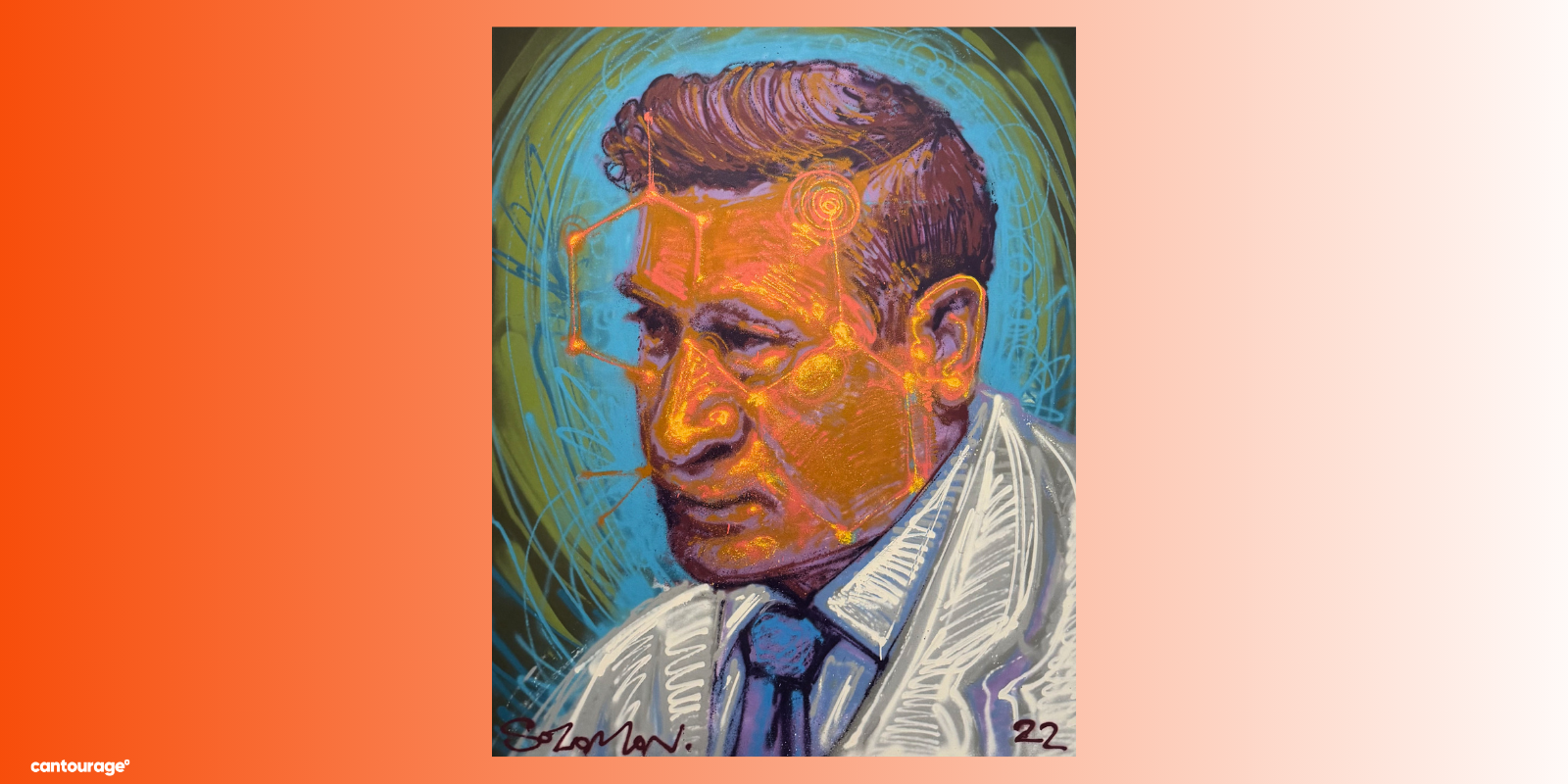
Israeli chemist Raphael Mechoulam, alongside colleague Yechiel Gaoni, successfully isolated and identified delta-9-tetrahydrocannabinol (THC), the primary psychoactive cannabinoid found in cannabis. Their work marked one of the most significant milestones in cannabinoid research and laid the scientific foundations for modern medical cannabis. For this reason, Mechoulam is widely recognised as the "father of cannabis research."
Cannabis Before THC
Long before modern laboratories existed, cannabis had established a place in medicine.
Historical records from China, Egypt and India describe cannabis being used for a variety of medical purposes, and by the nineteenth century cannabis tinctures were available in British pharmacies. Despite its widespread use, researchers had little understanding of the chemistry behind the plant.
Unlike medicines developed in modern laboratories, cannabis was prescribed without knowing which compounds produced its therapeutic effects.
Researchers knew the plant contained a complex mixture of chemicals, but isolating them proved extremely challenging.
Without understanding its active compounds, scientific progress remained limited.
A Discovery That Changed Everything
Raphael Mechoulam believed that before scientists could properly study cannabis, they first needed to understand its chemistry.
Working at the Weizmann Institute of Science in Israel, Mechoulam and Yechiel Gaoni began analysing cannabis using techniques that had already been successfully applied to other medicinal plants.
In 1964, they isolated and identified the structure of delta-9-tetrahydrocannabinol (THC).
For the first time, researchers knew which cannabinoid was primarily responsible for the characteristic psychoactive effects of cannabis.
This may sound like a purely chemical achievement, but its impact reached far beyond the laboratory.
Identifying THC meant scientists could finally study cannabis in a controlled, reproducible and evidence-based way.
Opening the Door to Modern Cannabis Research
Once THC had been identified, researchers could begin asking entirely new scientific questions.
How does THC interact with the human body? Why does it produce different effects in different people? Could it have therapeutic applications? How should it be dosed?
Instead of studying cannabis as a single plant, scientists could investigate individual cannabinoids and understand how each contributed to its pharmacological profile.
This transformed cannabis research from observation into modern science.
Beyond THC
Mechoulam's work did not stop with THC.
His research contributed to the identification of cannabidiol (CBD) and helped shape decades of cannabinoid science.
Perhaps even more importantly, this body of research ultimately led to the discovery of the endocannabinoid system (ECS) during the late 1980s and early 1990s.
Scientists found that the human body naturally produces its own cannabinoid-like compounds, known as endocannabinoids, and possesses specialised receptors that help regulate processes including pain perception, mood, appetite, memory, sleep and immune function.
The discovery of the endocannabinoid system fundamentally changed our understanding of human physiology.
Rather than acting on an unfamiliar biological pathway, cannabinoids were found to interact with a system already present throughout the body.
Why This Discovery Still Matters
Today, medical cannabis research extends far beyond THC alone.
More than 100 cannabinoids have been identified, alongside hundreds of terpenes and other naturally occurring compounds that continue to be investigated for their potential therapeutic roles.
Modern cannabis-based medicines are developed using standardised manufacturing processes, quality controls and rigorous clinical oversight. Researchers continue to investigate where cannabinoids may have a role across a range of medical conditions, while clinicians contribute to the growing evidence base through clinical studies and real-world data.
None of this would have been possible without first understanding the chemistry of the plant.
Mechoulam's discovery gave scientists the tools to investigate cannabis using the same rigorous approach applied to any other area of medicine.
A Legacy That Continues Today
Raphael Mechoulam published hundreds of scientific papers throughout his career and became one of the world's most influential cannabinoid researchers.
His work helped transform cannabis from a poorly understood medicinal plant into a legitimate field of scientific investigation.
Today, researchers around the world continue building on the foundations he helped establish.
Every new cannabinoid study, every clinical trial and every advance in cannabis-based medicine owes something to the moment THC was first isolated more than sixty years ago.
Final Thoughts
Scientific breakthroughs are often measured not only by what they discover, but by the questions they make possible.
Raphael Mechoulam's identification of THC did exactly that.
It shifted cannabis research from anecdote to chemistry, from speculation to evidence, and from historical observation to modern pharmacology.
As research into cannabinoids continues to evolve, the discovery of THC remains one of the defining moments in medical cannabis science. It provided the foundation for decades of research and continues to shape how cannabis-based medicines are understood, developed and studied today.
